What to check in the crawl space
An incomplete, torn, or missing vapor barrier can let ground moisture reach the crawl space. Note where the barrier is damaged and ask whether the moisture source and repair scope have been evaluated.
Most buyers never spend time in the crawl space, but problems there can affect the rooms above it. Look for moisture, weak supports, poor drainage, damaged ducts, plumbing leaks, and unsafe wiring below the floor before those conditions lead to larger repairs.
A wet or poorly supported crawl space can affect the floor system and the air in the house. Staining, soft wood, damaged insulation, or standing water may point to plumbing, drainage, or structural work that should be evaluated before closing.
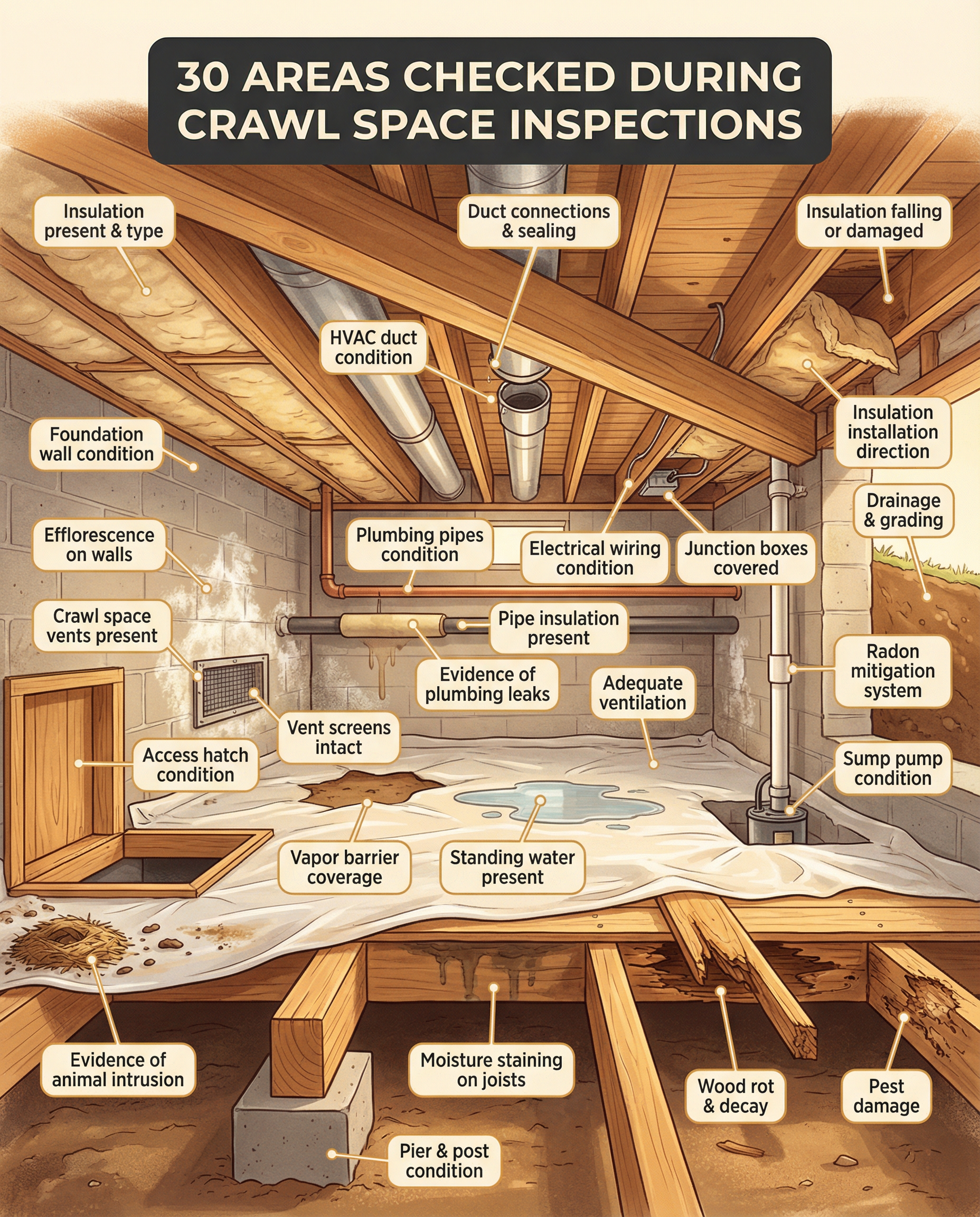
Start with what you can see: water, staining, damaged wood, movement, missing insulation, or unsupported ducts and pipes. Those clues help show whether the issue is routine maintenance or needs further evaluation for moisture, structure, or a mechanical system.
An incomplete, torn, or missing vapor barrier can let ground moisture reach the crawl space. Note where the barrier is damaged and ask whether the moisture source and repair scope have been evaluated.
Staining, microbial growth, or softened wood below a kitchen, bathroom, or laundry area can point to an earlier plumbing leak. Find out whether the leak was corrected and whether the wood still needs evaluation.
Disconnected or damaged ducts can leak conditioned air, while wet or displaced insulation may reduce comfort and affect air quality. Have the damaged material and duct connections evaluated before assuming the problem is minor.
Pest evidence, failed drainage, soft floors, or musty odors can indicate that the crawl space has stayed damp. Trace the water source and determine whether framing or other materials need specialist follow-up.