Electrical warning sign
Look for two wires under a breaker terminal or a breaker that does not match the panel brand. Those connections may not be approved for that panel and should be evaluated by a licensed electrician.
The electrical panel can show safety concerns, old repairs, and costs that are easy to miss during a walk-through. Look for signs of overheating, mismatched breakers, poor labeling, moisture damage, or outdated equipment. These conditions can affect how safely the system works and what needs attention after closing.
Panel problems can affect the repair budget, insurance questions, and whether a licensed electrician should evaluate the system before closing. Finding them during the inspection gives you time to understand the work and include it in the decision instead of discovering the cost later.
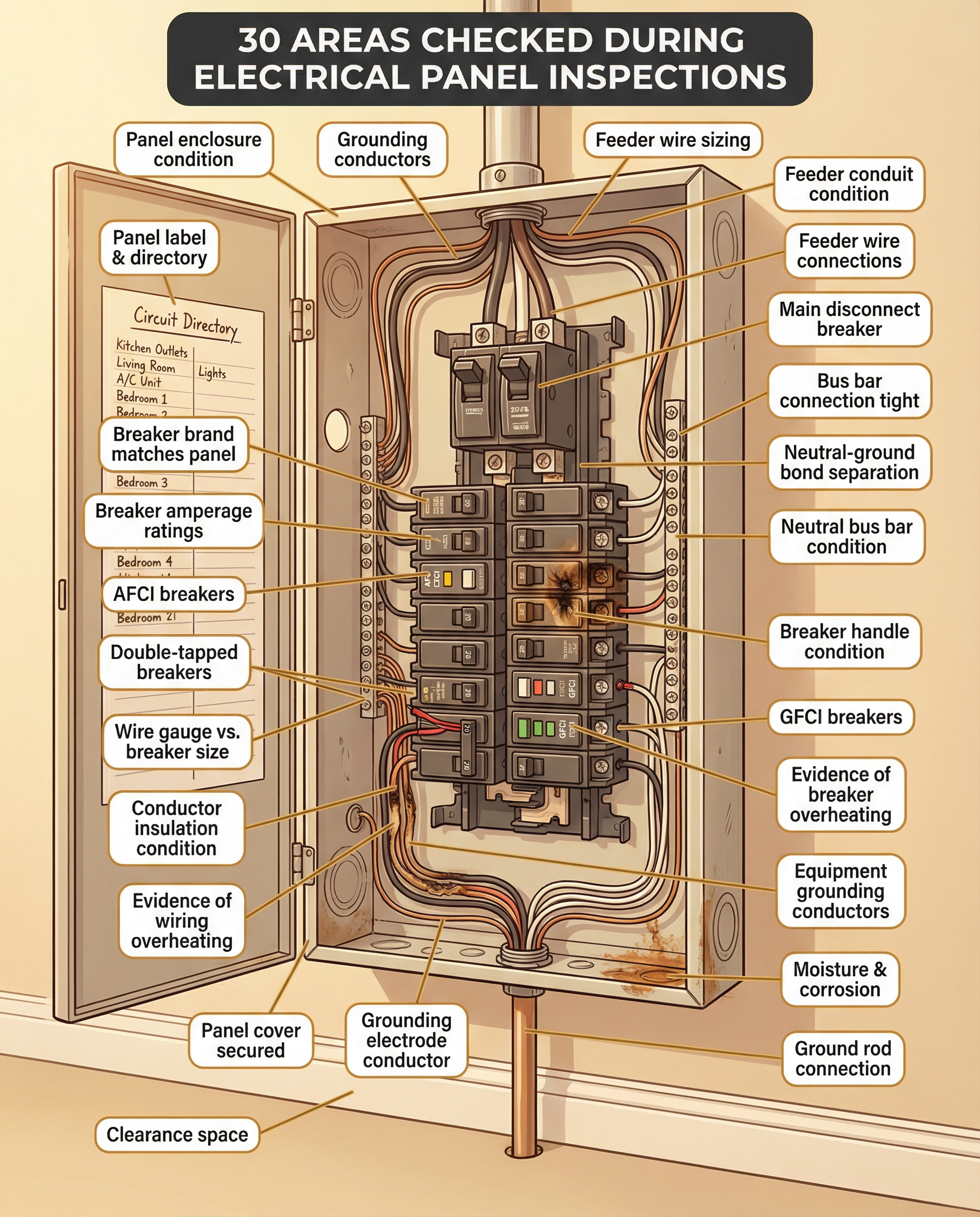
Some electrical defects create shock or fire hazards, while others point to unreliable circuits or work that needs correction. An inspection can show which conditions need prompt electrician review and which are routine upgrades, so you can weigh the findings before closing.
Look for two wires under a breaker terminal or a breaker that does not match the panel brand. Those connections may not be approved for that panel and should be evaluated by a licensed electrician.
Heat damage, scorched insulation, or corrosion inside the cabinet can point to an active or past electrical problem. Treat these as conditions for electrician review, not as cosmetic staining.
Incomplete or inaccurate circuit labels make it harder to shut off the right circuit during a repair or emergency. Ask for the labeling to be checked rather than guessing which breaker controls a circuit.
Open knockouts, improvised wiring, or an older panel can leave important questions about protection and workmanship. Have a licensed electrician review those conditions before you decide how to proceed.