Home / Buyer Guides / Foundation Crack Warning Signs: What Buyers and Agents Should Actually Worry About
Foundation guide

Foundation Crack Warning Signs: What Buyers and Agents Should Look For

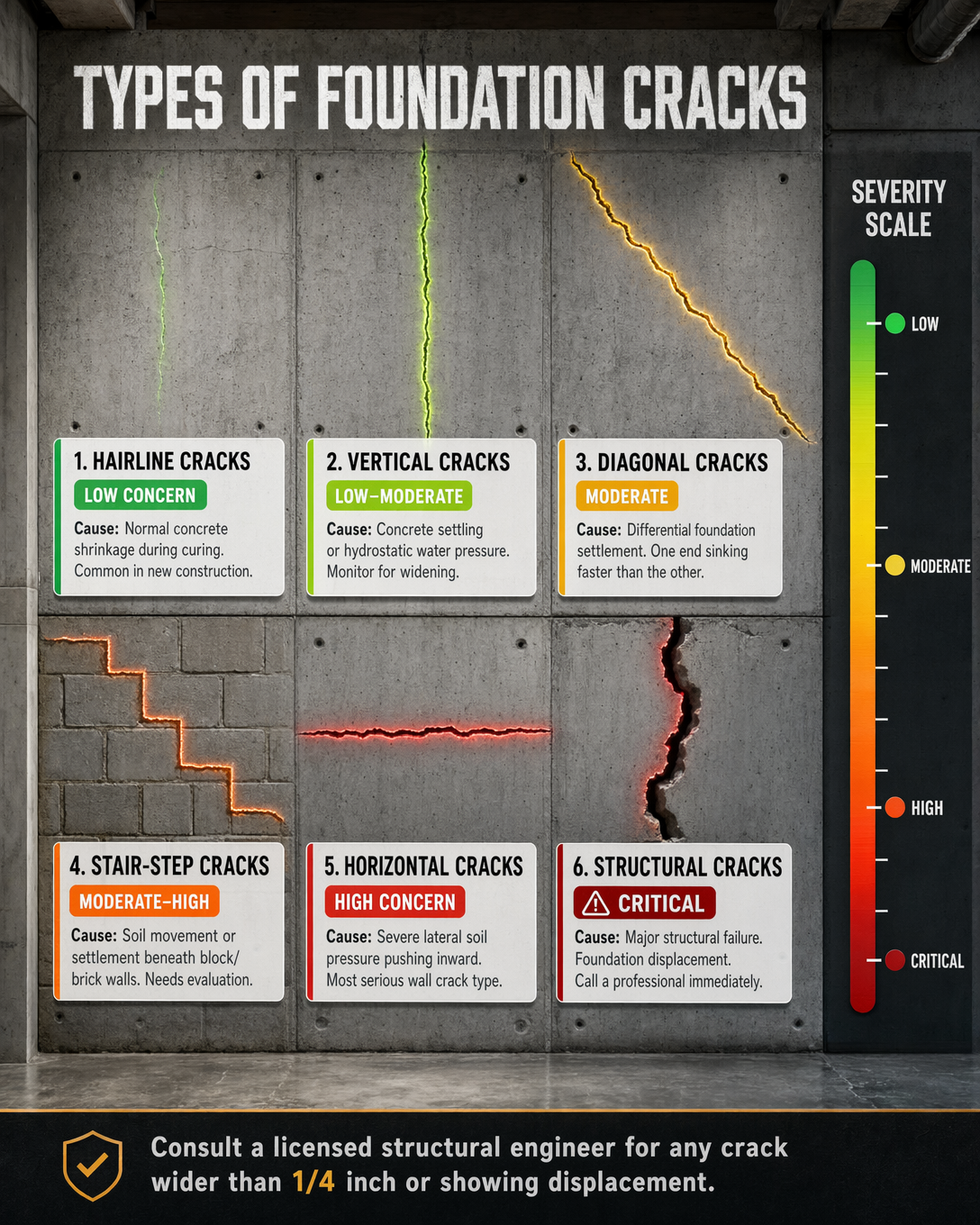
A foundation crack is not automatically a structural failure, but it should be read in context. Look at the crack's shape, width, location, moisture, and any movement around it. Those clues help separate normal concrete movement from settlement, lateral pressure, or displacement that may affect repair planning before closing.

An inspection puts those clues together. Some cracks are usually cosmetic, some are worth monitoring, and some patterns call for quicker review by a structural professional. The next step depends on what the crack is doing and what is happening around it.
Why buyers care

What to check around a foundation crack

A crack can involve the wall, the soil outside, and the way water is managed around the house. Check the crack itself, then look for signs of movement, water entry, drainage problems, or conditions that may need an engineering review.

  • The crack's shape and whether one side is displaced from the other. Note whether it is hairline, vertical, diagonal, stair-step, or horizontal.
  • The crack's width, length, and apparent change over time. An opening that is widening or approaches about one-quarter inch deserves closer attention.
  • Water staining, efflorescence, dampness, or drainage that sends water toward the wall. These clues can connect the crack to a larger moisture or soil-pressure problem.
  • Nearby signs such as sloping floors, sticking doors, separated brick, bowing walls, or patched repairs. Together, they may show that the issue extends beyond one crack.
  • The wall type: poured concrete, block, or stem wall. The same crack pattern can mean something different depending on how that wall was built.

What this crack pattern may mean

Hairline shrinkage cracks in newer concrete are often low concern when the wall is not displaced, there is no moisture intrusion, and nearby conditions do not suggest active movement. Keep the surrounding evidence in view rather than judging the crack by width alone.

What this crack pattern may mean

Vertical cracks can be common. A crack that widens, leaks, or appears with settlement clues elsewhere should be evaluated more closely rather than dismissed as cosmetic.

What this crack pattern may mean

Diagonal and stair-step cracks can point to uneven settlement. Concern increases when one side has moved more than the other or grading sends water toward the wall.

What this crack pattern may mean

Horizontal cracks, bowing, and noticeable displacement deserve prompt attention. They can indicate lateral pressure or deeper structural stress, so the inspection findings may need follow-up from a structural professional.

On Instagram

See the crack patterns on Instagram

The Instagram post shows the main crack patterns. Use this guide for the longer explanation of what is usually low concern, what to monitor, and which findings call for faster follow-up.

Related next steps

Compare the related systems

A foundation crack can be connected to drainage, the crawl space, or other parts of the house. Use the related guides to check those systems together before deciding what needs follow-up.

Book with context

Need an inspection?

An inspection can sort a foundation crack into a cosmetic issue, a maintenance concern, a larger defect, or a finding that needs specialist follow-up before closing.