C&H Inspections learning hub · water heaters
Your water heater is a controlled pressure system.
Water heaters heat water under pressure, which is why their safety controls, relief path, combustion venting, and drainage details matter. This short lesson explains the basic safety chain in a way homeowners can recognize without trying to service the equipment themselves.
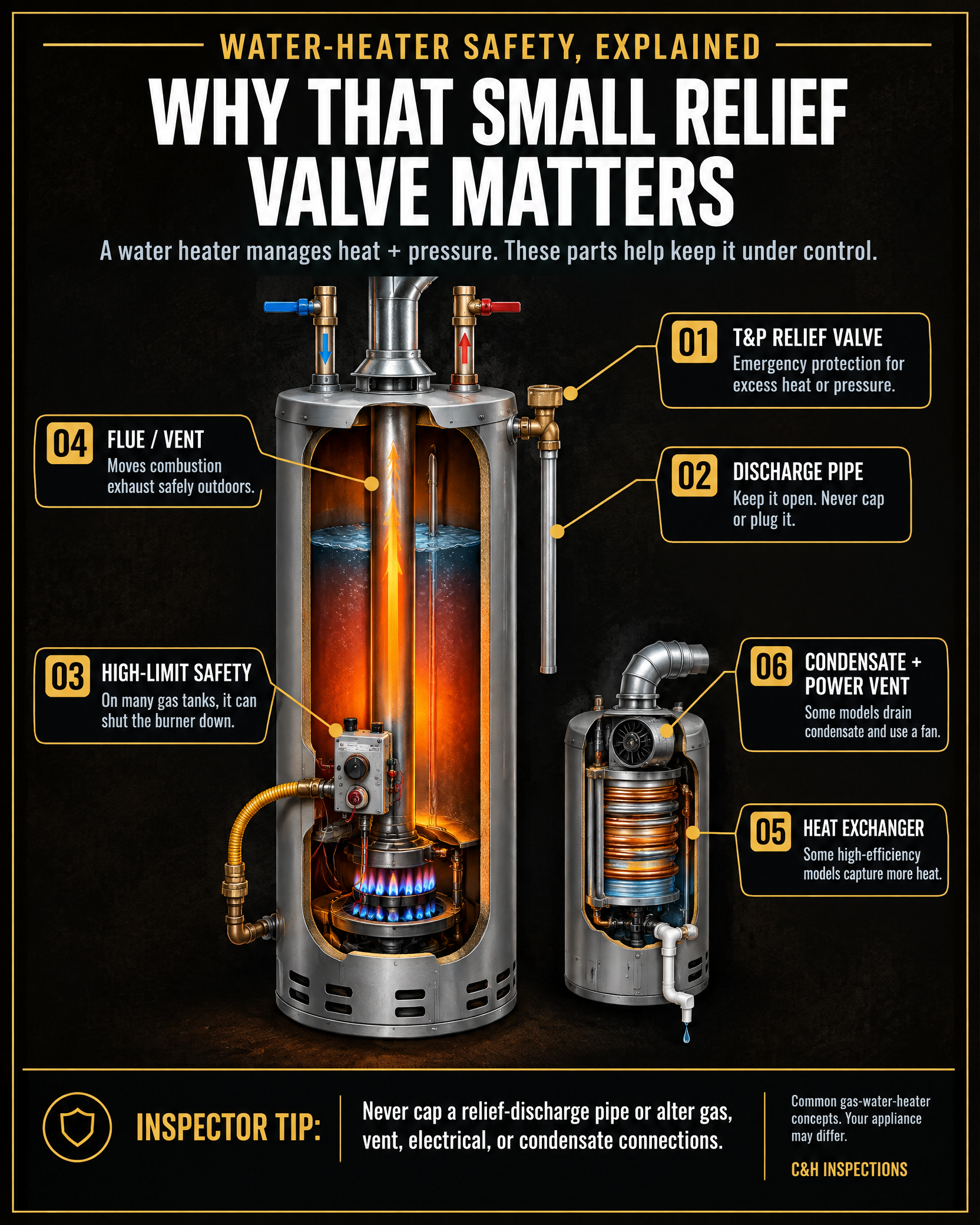
The video covers the temperature-and-pressure relief valve, its discharge pipe, high-limit safety control on many gas tank heaters, flue or venting, heat exchangers, condensate drains, power vents, and why tankless equipment still needs model-specific safety and venting details.
What the visible parts are doing
- T&P relief valve: emergency protection for excessive temperature or pressure.
- Discharge pipe: carries relief discharge away; it must remain open and unobstructed.
- Flue or vent: moves combustion exhaust safely outdoors on gas equipment.
- Condensate drain and power vent: some condensing units use these to manage cooled exhaust and condensate.
Look—do not test or modify
Never cap, plug, or reduce a water-heater relief-discharge pipe. Do not alter gas, vent, electrical, or condensate connections. If you see leakage, corrosion, loose venting, a damaged or missing discharge pipe, or a carbon-monoxide alarm, keep clear and contact the appropriate qualified professional or emergency service.
Watch the matching Instagram Reel · Back to the Learning Hub · Plumbing materials · HVAC ductwork