Septic systems · follow the wastewater
What happens after you flush?
If your house uses a septic system, the wastewater does not disappear when it leaves the bathroom. It goes through a treatment process right on the property. The tank is only one part of that process—and the part after the tank is worth protecting.
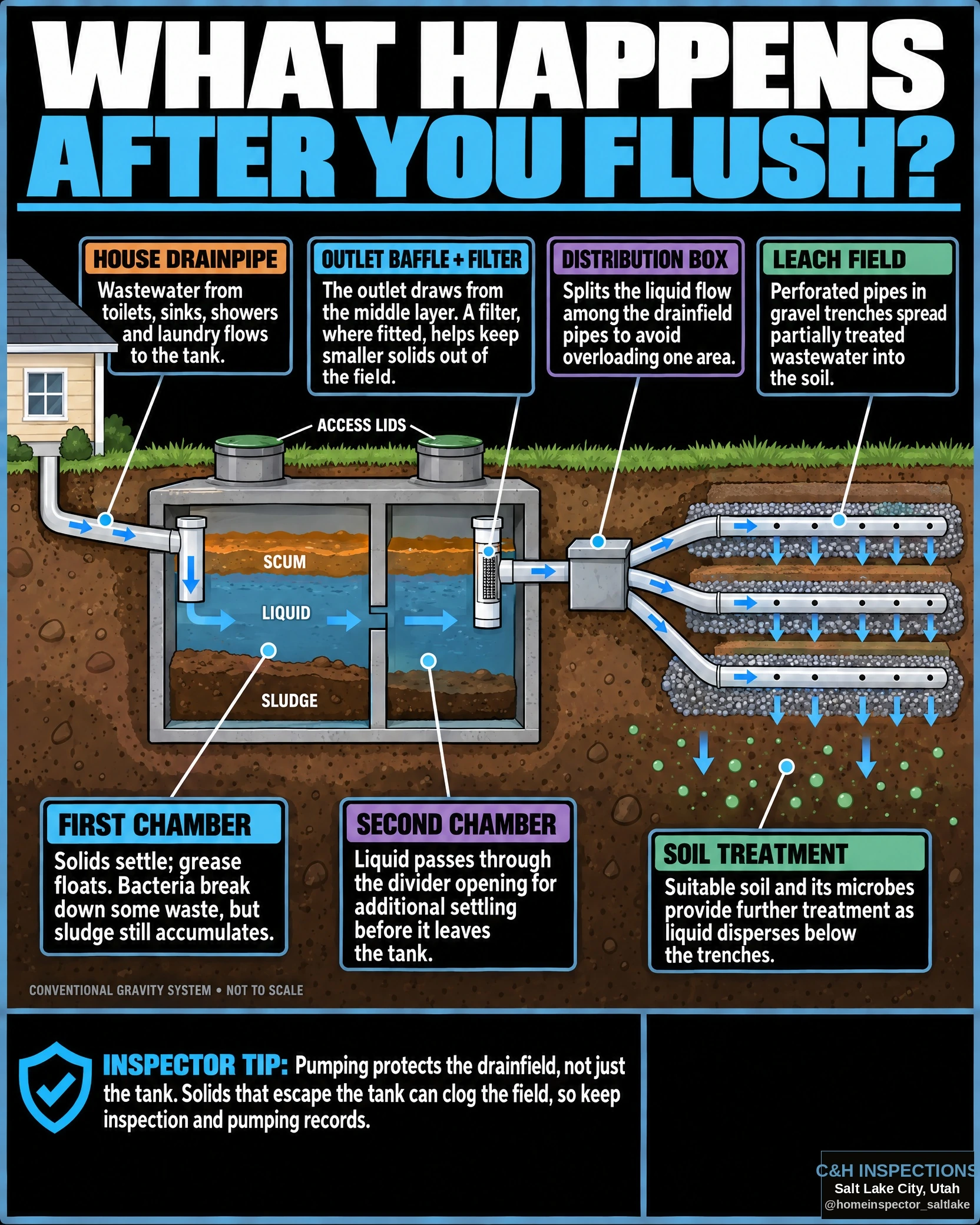
The short answer
The tank separates waste. The soil continues the treatment.
Heavy solids settle. Grease and lighter material float. Liquid leaves the tank through the outlet and is distributed to the drainfield. Suitable soil beneath the field helps treat and disperse that wastewater.
That liquid is called effluent. It is partially treated wastewater—not clean water just because it passed through a tank.
Inspector tip: pumping protects the drainfield, not just the tank. Solids that escape can clog the field. Keep inspection and pumping records instead of waiting for the plumbing to back up.
Start with the pipe leaving the house.
The toilets are only part of the story. Sinks, showers, and laundry also send wastewater through the house drainpipe. In the conventional system shown here, that pipe carries it into a buried septic tank rather than onward to a municipal treatment plant.
The tank holds the wastewater long enough for material to separate. Heavier solids settle to the bottom as sludge. Grease and lighter material collect at the top as scum. The middle layer contains liquid wastewater.
Bacteria break down some of the organic waste. But that does not mean everything you flush gets consumed or that the tank cleans itself. Sludge and scum still accumulate. The EPA's explanation of septic operation makes that separation step clear.
Why there are two chambers in the diagram
The drawing shows liquid moving through an opening in the divider to a second compartment. That gives material another chance to settle before it reaches the outlet. It is not a second stage that makes the wastewater safe to handle.
Not every installed tank has this exact layout. Age, approved design, and system type matter. The diagram explains a conventional gravity arrangement; it is not a drawing of a particular property or a requirement that every system have these exact components.
The outlet should keep the floating and settled waste behind.
Look at where the outlet draws from in the infographic: the middle liquid layer. The outlet baffle or tee helps keep the scum above and sludge below from continuing into the drainfield.
Where an effluent filter is fitted, it helps retain smaller solids. It needs appropriate professional maintenance. A filter is not a substitute for pumping, and it does not disinfect the water.
A damaged baffle, neglected filter, or excessive solids buildup can affect what leaves the tank. You may not see any of those conditions from the bathroom. That is one reason “the toilet still flushes” is not a complete condition check.
The distribution box shares the load. The soil does more work.
In this gravity layout, liquid reaches a distribution box before entering the drainfield lines. The box divides the flow among the lines so one area does not receive more than its share. Poor distribution can overload one part of a field while other parts do much less work.
The drainfield—also called a leach field or soil absorption field—is not just a hole for waste to disappear into. In the gravel-trench example, perforated pipes spread the effluent into the trenches. It then moves into the surrounding suitable soil.
Soil processes and microorganisms provide further treatment while the liquid disperses. Soil conditions, space, and separation from groundwater matter. You cannot assume a patch of gravel turns wastewater into clean drinking water or removes every pollutant.
The University of Rhode Island's system guide explains these components. Other designs use chambers, pumps, pressure distribution, or additional treatment. EPA's system examples show why the approved plan for the property is more useful than assuming every septic system matches this illustration.
Pumping is about protecting what comes after the tank.
As solids accumulate, the tank has less effective space for separating waste. Material that should remain in the tank can move toward the outlet and the field. Once that material contributes to clogging in the drainfield, emptying the tank does not automatically restore the soil's ability to accept wastewater.
That is the point behind the inspector tip in the graphic. Do not think of pumping as simply making room for another few years of toilet use. Think about keeping the solids out of the treatment area that is much harder to service.
EPA recommends professional inspection at least every three years for an average household system. Household tanks are typically pumped every three to five years, but tank size, household use, solids loading, and measured condition determine the actual schedule. Systems with pumps or mechanical components generally need more frequent checks, often annually.
Those are general care recommendations, not a promise that waiting five years is safe for every home or a statewide Utah inspection law. Have the professional document what was found and when the next service is needed. Keep that report with the pumping records and system plan.
What happens in the house affects the field outside.
A leaking toilet adds water continuously. Doing every load of laundry in one day adds a concentrated burst. Spreading laundry through the week and repairing leaks helps avoid sending unnecessary flow into the system.
Keep grease, wipes, and other non-toilet waste out of the drains. A product labeled “flushable” is not a reason to send it into the septic tank. Routine additives are not a replacement for inspection or pumping.
Outside, do not drive or park over the drainfield. Avoid paving it or adding a shed, patio, or other structure without checking the approved design and local requirements. Ask the septic professional about appropriate planting; deep roots and a vegetable garden are not the default choices over the field.
Roof runoff and sump discharge also need somewhere else to go. Excess outside water can interfere with the field's ability to accept and treat wastewater. That connects to the foundation drainage lesson, but the goal is not to move water away from the foundation only to send it onto the drainfield.
Notice the warning signs. Leave the tank closed.
Sewage backing up indoors, multiple slow drains, gurgling, sewage odors, or damp and unusually lush areas around the field are reasons to arrange an evaluation. They do not identify the failed part on their own. A slow fixture could have a local blockage, and an odor may have another explanation.
If sewage surfaces or backs up, avoid contact, keep people and pets away from the affected area, reduce unnecessary water use, and contact a qualified septic service provider and the local health department for guidance. Do not keep using extra water to see whether the problem clears itself.
Do not open a septic tank yourself. Never enter it or lean over an opening. Dangerous gases, falling, and unsafe covers can be fatal. Keep covers secure and children and pets away. Leave opening, pumping, filter service, and repairs to trained professionals. If someone falls in, call emergency services; do not enter to attempt a rescue.
The septic tank safety warnings from South Carolina's environmental agency explain these hazards. The access lids in the illustration show how professionals reach the system; they are not an invitation to lift a cover and look inside.
Buying a house on septic? Ask about the whole system.
Start with the permit, approved design or as-built record, tank and field locations, service history, and any required operating or maintenance arrangements. Then confirm what a qualified septic-specific evaluation will cover.
Do not assume a general home inspection or a sewer-line camera inspection evaluates the tank and drainfield. A camera view of an accessible pipe can answer a pipe question. It cannot, by itself, establish the condition or treatment performance of the entire septic system.
In Utah, your local health department is a useful contact for records and applicable onsite-wastewater requirements. Utah DEQ's onsite wastewater program also provides information about appropriately certified professionals. Confirm local requirements before changing the system; do not treat a general diagram as permission to move or modify it.
For a general home inspection, C&H can help put the house's visible conditions and your follow-up questions in order. Ask about scope before booking. A septic-specific evaluation is separate; this article is not an offer of septic pumping, repair, or a septic certification.
Keep following the connected systems.
Plumbing pipe types adds context inside the house. The sewer-line guide explains pipe concerns without replacing a septic evaluation. Foundation drainage and roof runoff follows outside water.
See the original septic infographic on Instagram, or return to every Learning Center post.
Further reading
EPA: How Your Septic System Works
EPA: Caring for Your Septic System
EPA: Septic System Malfunctions
University of Rhode Island: Understanding Septic Systems
Utah DEQ: Onsite Wastewater